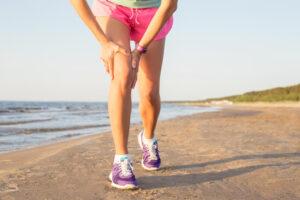

Injuries are the most dangerous opponent and hurdles for sports people. Any time any accidental injury can beat a career not only for a few days, but also can able to make unfit permanently. Be aware … Prevention is better than cure.
These five most common injuries can become a big demon for sports people:
- ACL Injury
- Meniscus Injury
- Tennis Elbow
- Ankle Sprains
- Shoulder Injuries
These kinds of injuries are the major trouble for fitness issues.
ACL Injury
ACL is commonly known as Anterior Cruciate Ligament, are found inside our knee joint. In the middle of the knee; the Cruciate Ligaments runs diagonally, they cross each other to form “X” with the anterior Cruciate Ligament in front and the posterior Cruciate Ligament in back. It prevents the Tibia (shinbone) from sliding out in front of the Femur (thighbone) and provides rotational stability to the knee.
ACL Injury is a sprain or tear of the anterior Cruciate Ligament. Sports man, who is involved in sudden stops or changes in direction and jumping and landing; be aware. They are in a high risk zone of ACL injury.
Almost half of all injuries to the anterior Cruciate Ligament occur along with damage to other structures in the knee.
Partial tears of the anterior Cruciate Ligament are rare; most ACL injuries are complete or near complete tears.
Symptom –
When anterior Cruciate Ligament is injure, there is a possibility to might hear a “popping” noise or “popping” sensation in the knee and loss of full range of motion.
Within 24 hours, knee will swell. If ignored, the swelling and pain may resolve on its own. However, if patient attempt to return to sports, knee will probably be unstable and possibility of further damage to the cushioning cartilage (meniscus) of knee.
Meniscus Injury
Any activity that causes to forcefully twist or rotate of our knee, especially when we are putting full weight on it, can lead to a torn meniscus.
Each of our knees has two C-shaped pieces of cartilage that act like a cushion between our shinbone and our thighbone.
A torn meniscus can result from any activity that causes us to forcefully twist or rotate our knee, such as aggressive pivoting or sudden stops and turns.
Symptom –
A torn meniscus causes pain, swelling and stiffness. We also might feel a block to knee motion and have trouble extending knee fully with might have a popping sensation, pain, especially when twisting or rotating knee, difficulty straightening knee fully, feeling as though knee is locked in place when try to move it.
Tennis Elbow
Painful weakening of the tendons that join our forearm muscles to our bones. It happens when we work our elbow too much by repeating certain motions. Doctor calls it Lateral Epicondylitis.
Despite its name, athletes aren’t the only people who develop tennis elbow. Those jobs are to feature the types of motions that can lead to tennis elbow.
It’s related to a muscle and tendons in our forearm. Tendons connect our muscles to our bones. When we repeat certain arm movements, the tendons at the elbow end of a certain muscle – the Extensor Carpi Radialisbrevis (ECRB) muscle – may get small tears.
The tears may put stress on the rest of our arm, making it painful to lift and grip things. If we don’t get treatment, the pain can last a long time.
We can have tennis elbow in one or both arms.
Symptom –
The most common symptom of tennis elbow is an ache on the outside of elbow. Over time – from a few weeks to a few months – the ache turns into a constant pain. The outside of elbow may be too painful to touch.
The pain is focused on the outside of our arm, where forearm meets elbow. Pain can also spread into our forearm and wrist.
Pain and weakness may make it difficult to shake hands or grip an object, to turn a doorknob, hold a coffee cup etc.
Ankle Sprains
Incidence of ankle sprain is highest in sports populations. Inversion-type, lateral ligament injuries represent approximately 85% of all ankle sprains. Poor rehabilitation after an initial sprain increases the chances of this injury recurrence.
The ligaments in the ankle help to keep the bones in proper position and stabilize the joint. Most sprained ankles occur in the lateral ligaments on the outside of the ankle. Sprains can range from tiny tears in the fibrous that make up the ligament to complete tears through the tissue.
If there is a complete tear of the ligaments, the ankle may become unstable after the initial injury phase passes. Over time, this instability can result in damage to the bones and cartilage of the ankle joint.
Symptom –
A sprained ankle is painful. Bruising and swelling are common signs of a sprained ankle. Other symptoms like tenderness to touch, instability of the ankle which may occur when there has been complete tearing of the ligament or a complete dislocation of the ankle joint.
If there is severe tearing of the ligaments, then might also hear or feel a “pop” when the sprain occurs. Symptoms of a severe sprain are similar to those of a broken bone and require prompt medical evaluation.
Athletes with chronic ankle instability miss practices and competition, require ongoing care in order to remain physically active, and display sub-optimal performance.
Shoulder Injuries
Shoulder has a wide range of motion, making it the most mobile joint in the body. But because of this flexibility, it is not very stable and is easily injured.
The shoulder is made up of two main bones. Humerus (the end of upper arm bone) and Scapula (the shoulder blade). The end of the Humerus is round and fits into a socket in the Scapula. Surrounding the shoulder is a group of muscles and ligaments. Ligaments connect the bones of the shoulders. Tendons connect the bones to surrounding muscle.
Symptom –
Several kinds of shoulder injuries exist:
- Shoulder Instability – Shoulders often stiffen or tighten.
- Rotator Cuff Tear – Hard to move the arm up or away from the body.
- Frozen Shoulder – Extreme stiffness in the shoulder.
- Overuse or Strains – Pain and loss of flexibility.
- Arthritis – Painful movement.
How to avoid Injuries?
It is neither a one word answer nor an explainer. No one invites injuries. Awareness is the only concern. Because an injury varies with age, fitness, body weight, physical structure, hormonal balance, sports environment and off course with weather.
The sports medicine physician, physical therapist, athletic trainer or other specialist in sports medicine can provide assessment; instruction and feedback which can help to reduce risks.
Take a good protection by wearing sportswear and padding that is appropriate for sport to help prevent injury.
Get a proper guidance by a trained professional. Training and exercise emphasizing proper technique may help to reduce injuries.
Treatment
Joint is a complex structure of bones, ligaments, tendons and other tissues that work together. It’s important to get a prompt and accurate diagnosis to determine the severity of the injury and get proper treatment.
All kind of injuries will not heal without surgery. But nonsurgical treatment may be effective for patients who are elderly or have a very low activity level.
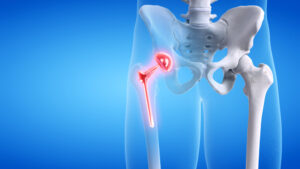
All tears cannot be stitched back together. There is a possibility of surgically repair some tissues and restore stability, the ligament must be reconstructed. Doctor can replace ligament with a tissue graft. This graft acts as scaffolding for a new ligament to grow on.
Specific exercises and treatment will restore function and strengthen.
So seek immediate care if any injury is there. Do not ignore any injuries, maybe its a little tin. Otherwise injuries will ignore career.